MECC announces green cement innovation
The Ministry of Environment and Climate Change (MECC) organized a symposium to announce the innovation of green cement made from sewage waste, following environmental and sustainability standards.
The project aims at promoting environmental sustainability and supporting the circular economy.
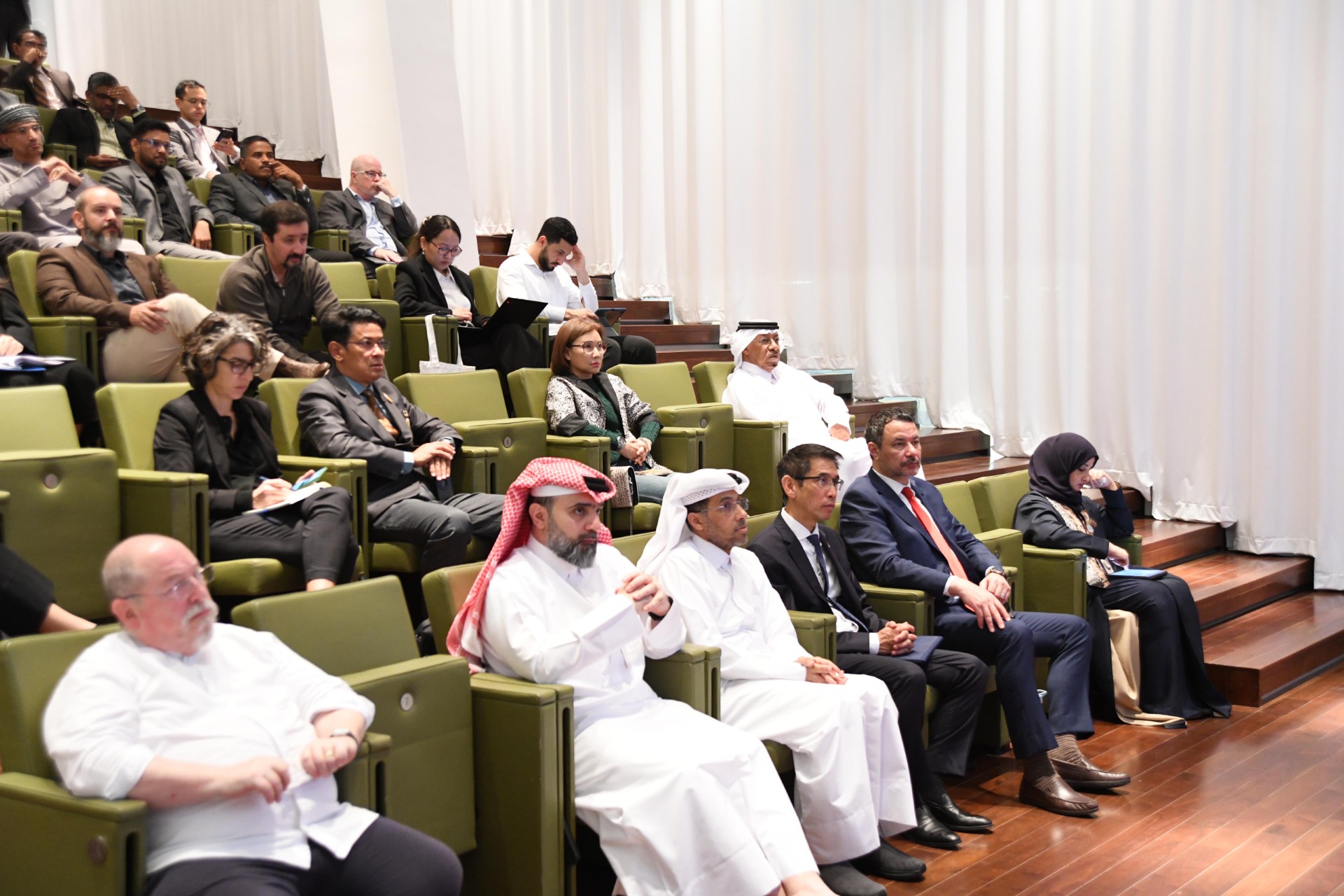
The event was attended by Minister of Environment and Climate Change H E Dr. Abdullah bin Abdulaziz bin Turki Al Subaie, Minister of Education and Higher Education H E Buthainah bint Ali Al Jabr Al Nuaimi and Minister of Municipality H E Abdullah bin Hamad bin Abdullah Al Attiyah.
The MOECC honored the research team which includes Dr. Engineer Mohammed Saif Al-Kuwari and Dr. Khalid Hassan, in collaboration with Queen’s University Belfast in the United Kingdom, as well as several government entities and private sector companies that contributed to the project.
The seminar witnessed a visual presentation, and a detailed explanation of the project presented by the research team, in the presence of a group of consultants and experts in the fields of environmental sustainability, roads, the cement industry, and construction materials. The project was also discussed from the technical and practical aspects.
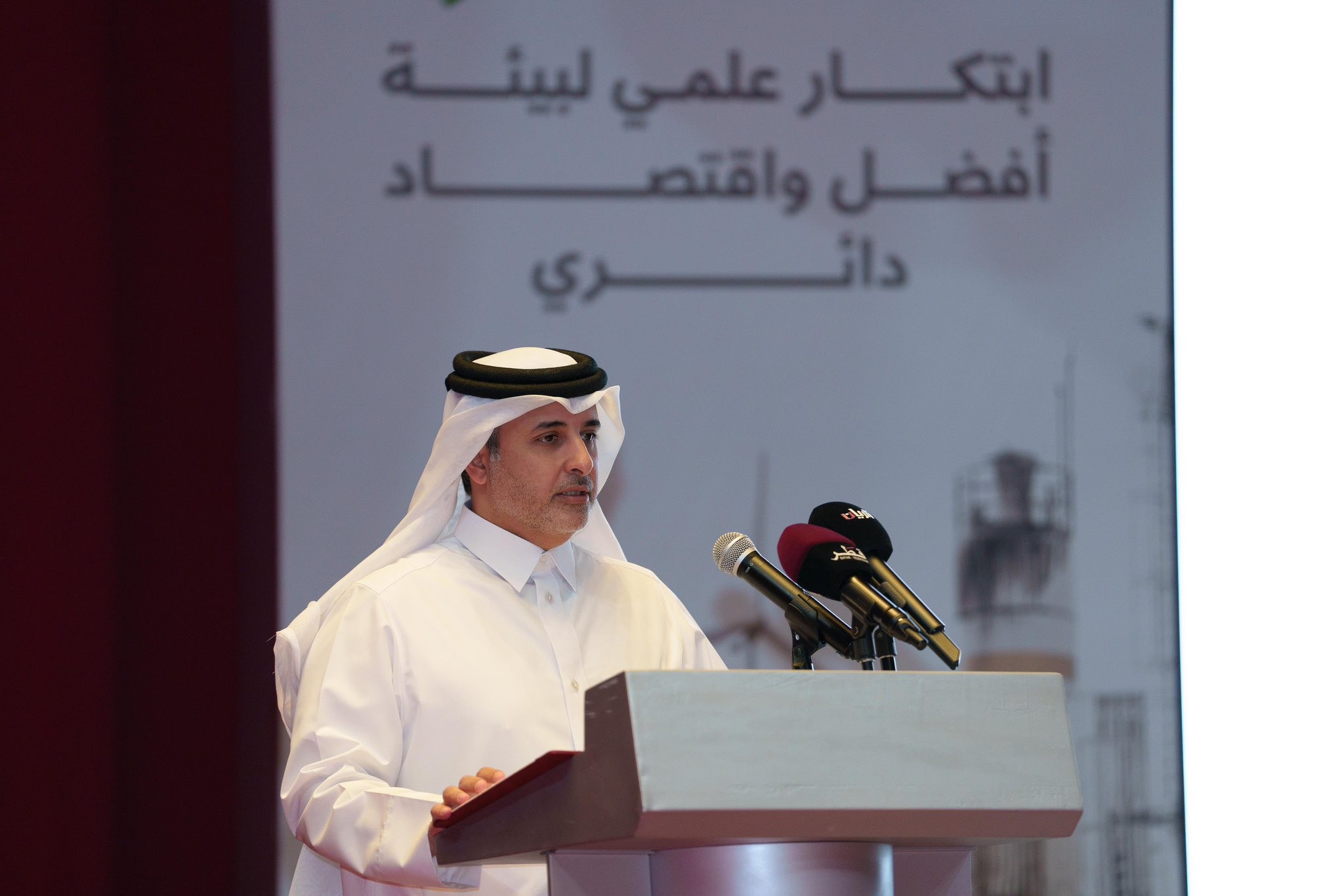
In his speech, HE Minister of Environment and Climate Change Dr. Abdullah bin Abdulaziz bin Turki Al Subaie lauded the efforts made by the scientific research team in treating solid sewage waste and converting it into environmentally friendly green cement, in line with Qatar National Vision 2030. He noted the State of Qatar’s interest in supporting and promoting scientific research and innovation, within the framework of implementing the directives of the wise leadership.
His Excellency stressed the MOECC’s interest in applied scientific research that addresses the challenges of the environment, climate, wildlife, and sustainability sectors, in addition to encouraging researchers to conduct purposeful scientific research.
For his part, Engineering Consultant and Environmental Expert in the MOECC Dr. Mohammed Saif Al Kuwari stressed the State of Qatar’s keenness to protect the environment and its natural balance, to achieve comprehensive and sustainable development for all generations, especially in priority areas, including greenhouse gas emissions, air quality, biodiversity, water, circular economy, waste management, and land sustainability.
He added that the MOECC is making great efforts to enhance and protect the environment in Qatar by encouraging applied scientific research, which contributed to the success of the scientific research team in inventing green cement from solid sewage waste, which is one of the challenges facing the environment due to the accumulation of these materials in nature. This research also encourages partnerships between the private and public sectors to invest in natural green cement in some construction projects and the engineering materials industry.
Green cement is produced by treating the sludge generated from solid sewage waste through processes of incineration, grinding, and mixing with catalytic materials. It is practically applied in the manufacturing of building blocks and foamed concrete using recycled materials. This innovation helps reduce the carbon footprint and protects air, soil, and groundwater quality from pollutants, while also mitigating the negative environmental impacts of sludge.
The idea for this innovation originated from the ministry’s research team in collaboration with researchers from Qatar and Queen’s University Belfast. The project was submitted to the Qatari Fund for Scientific Research in its twelfth round in 2021, undergoing scientific and technical evaluation by global assessors and experts in the field, earning the highest rating (A) for three years.
Qatar generates approximately 40,000 tons of sewage sludge per year, which could be fully consumed to produce 40 million concrete blocks with a cost saving of 10 percent compared to conventional Portland cement blocks, or the production of 150,000 cubic meters of foamed concrete for fill applications with a higher saving rate of 20 percent.
This innovation comes within the efforts of the MOECC to enhance environmental sustainability and support the circular economy, which aims to reduce waste of materials, goods, and energy, and increase their sustainable use.
This effort aligns with the fourth axis of Qatar’s Environment and Climate Change Strategy and is consistent with the Third National Development Strategy (2024-2030), which focuses on rationalizing the use of natural resources, protecting ecosystems, reducing greenhouse gas emissions, and enhancing capacity and resilience to face future environmental threats, in support of Qatar National Vision 2030.