MECC organizes seminar on protecting, afforestation of coastal areas in collaboration with “Earthna” Center and Qatar University
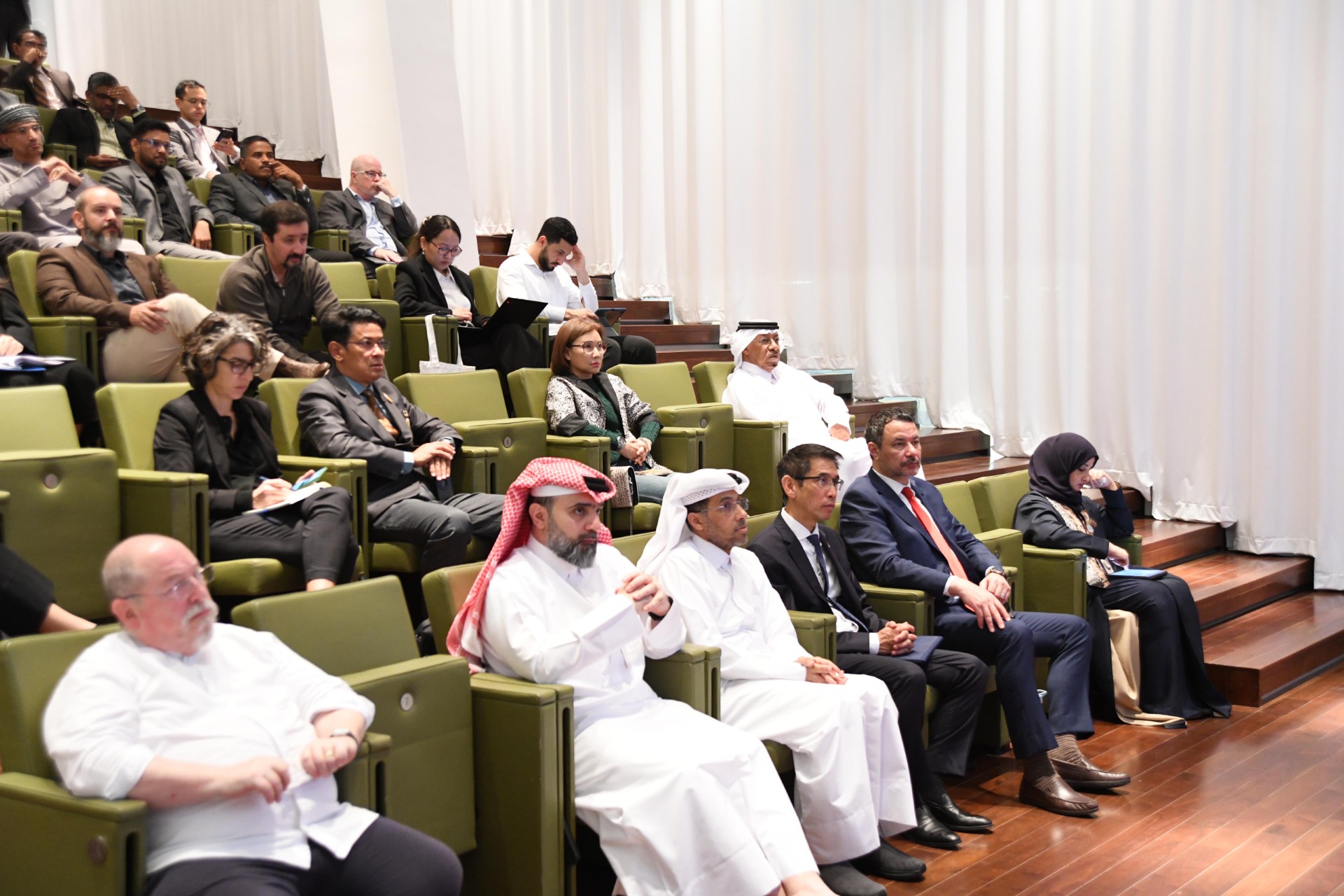
The Ministry of Environment and Climate Change (MoECC), in collaboration with the Qatar Foundation (QF)’s Earthna Centre and Qatar University’s Environmental Science Centre (ESC), organized a forum Monday on Protection and afforestation of coastal areas in Qatar with mangrove trees.
This is the first in a series towards an action plan with the participation of the Thailand embassy, aimed at promoting environmental sustainability and biodiversity protection in Qatar.
Addressing the participants, Youssef Ibrahim al-Hamar, the director of the MoECC’s Wildlife Development Department, stressed that Qatar is making significant efforts to protect and rehabilitate its coastal ecosystems, focusing on mangrove trees, which play a crucial role in supporting biodiversity, protecting coastlines, and enhancing environmental sustainability.
He said that the ministry, in collaboration with the ESC and Earthna, has launched a national joint programme to protect and rehabilitate coastal areas, including mangrove trees, seagrasses, and coral reefs, supported by the Mediterranean Shipping Company.
Al-Hamar explained that the MoECC has established a special nursery for mangrove propagation, where over 15,000 seedlings have been cultivated.
Scientific studies have been conducted in collaboration with research and academic institutions to monitor and assess optimal environments for replanting.
The ministry has also launched an awareness campaign, including field visits for school students to enhance environmental awareness on the importance of mangrove trees in preserving marine biodiversity.
Al-Hamar noted that the National Coastal Protection Programme is in line with Qatar National Vision 2030’s third strategy and is consistent with the Kunming-Montreal Global Biodiversity Framework, which supports global efforts to protect the environmental resources.
He further highlighted that the ministry is working with the United Nations Environment Programme (UNEP)’s West Asia Office to develop a biodiversity database, including updated maps of mangrove distribution in Qatar, alongside a comprehensive protection plan.
Dr Radwan Ben Hammado, the director of the Research and Policy Section at Earthna, welcomed the participants, while Thai ambassador Sira Swangsilpa delivered a presentation on biodiversity in Thailand, including proposals for cooperation between the two countries in this field.
The seminar included an intervention by Ms. Darong Jaing, Director of the Mangrove Forest Protection Department at the Thai Ministry of Natural Resources and Environment, who reviewed Thailand’s experience in protecting mangrove forests and the role of public-private partnerships in supporting this experience.
The seminar also featured scientific presentations from Dr. Pratip Duangka, Associate Professor and Head of the Department of Forest Biology at the Faculty of Forestry, and Dr. Pasinee Ratchanon, Assistant Professor in the Department of Environmental Technology and Management at Kasetsart University, Thailand.
Dr. Radwan Ben Hamado moderated an open discussion session with the participants, during which Ms. Sara Abdul Majid, Project Manager at the “Earthna” Center, presented a model project for the protection of mangrove forests funded by MSC Foundation.
Qatar University also presented its research and efforts in this field, delivered by Dr. Jassim Al-Khayyat, Associate Professor and Senior Researcher at the Environmental Sciences Center.
Dr. Aspa Chatsifemio, Project Science Officer at the “Earthna” Center, reviewed the key lessons learned from the mangrove project, while experts from UNESCO, the Ministry of Environment and Climate Change, and the “Earthna” Center held a discussion on the role of education in enhancing environmental awareness.
The seminar also included a panel discussion on ecotourism and its development prospects, with experts from the Ministry of Environment and Climate Change and Qatar University, where the potential of ecotourism and its role in the sustainability of mangrove forests was discussed.
At the end of the seminar, working groups were launched to discuss key topics related to mangrove forest protection, education, and ecotourism. The general session reviewed the reports from these working groups, and the importance of establishing an international and national group to support the project was discussed.