The Ministry of Environment and Climate Change showcases its experience to a student delegation from Akita University in Japan
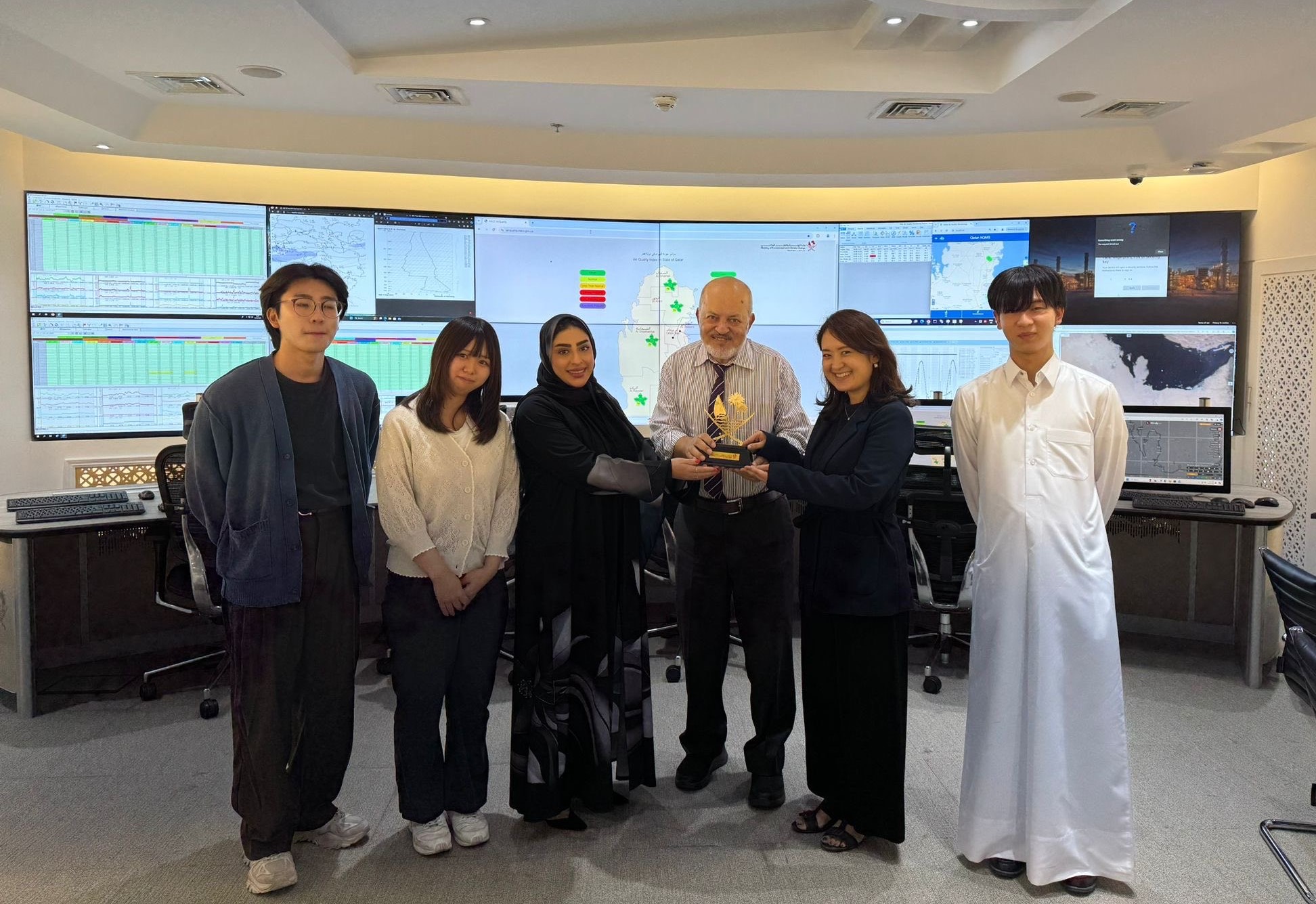
The Ministry of Environment and Climate Change welcomed a group of students from Akita University in Japan to learn about and explore the Central Environmental Laboratory. The students were introduced to the latest technologies used for monitoring marine water quality and soil.
The visit aimed to enhance international cooperation in environmental fields and to promote understanding of the importance of environmental monitoring. It also sought to exchange expertise between both parties in the areas of inspection and environmental laboratories. During the visit, the Akita University delegation witnessed the advanced equipment used for marine and soil monitoring in Qatar, along with detailed explanations of how to use these tools to ensure environmental sustainability. They also learned about environmental monitoring programs that include the surveillance of beaches, coastal waters, and exclusive economic zone waters, as well as monitoring marine outfalls.
The visit also included the Environmental Laboratory section and its role in preserving biodiversity in Qatar. The students received a detailed explanation about the laboratory analyses related to the marine environment, including biological, chemical, and physical analyses such as testing for heavy metals, dissolved oxygen, nitrates, phosphates, bacteria, and plankton. Additionally, they learned about soil quality analyses that include organic matter, heavy metals, and particle size.
The Japanese delegation also focused on learning about industrial inspections and their importance in ensuring that industrial facilities comply with environmental standards and reduce pollution resulting from certain operations that may harm the local environment. Emphasis was placed on protecting the environment and public health. They observed the mechanisms of inspection teams as they visited facilities to monitor emissions and discharges, and they were introduced to the tools used in these processes.
The visit concluded with a session on air quality monitoring, where the student delegation was introduced to techniques for monitoring air pollutants, such as sulfur dioxide (SO2), nitrogen oxides (NOx), particulate matter (PM10, PM2.5), carbon monoxide (CO), and ozone (O3). The importance of these processes in protecting public health and the environment was emphasized. The students also visited the Air Quality Data Analysis Unit, which monitors pollution levels across various regions of Qatar around the clock. This visit provided the students with a comprehensive overview of the role of environmental monitoring and inspection management in ensuring the sustainability of natural resources. It highlighted the importance of collaboration between academic institutions and government agencies in enhancing joint environmental efforts and exchanging knowledge and expertise, thereby helping to build the capacities of young people to address future environmental challenges.